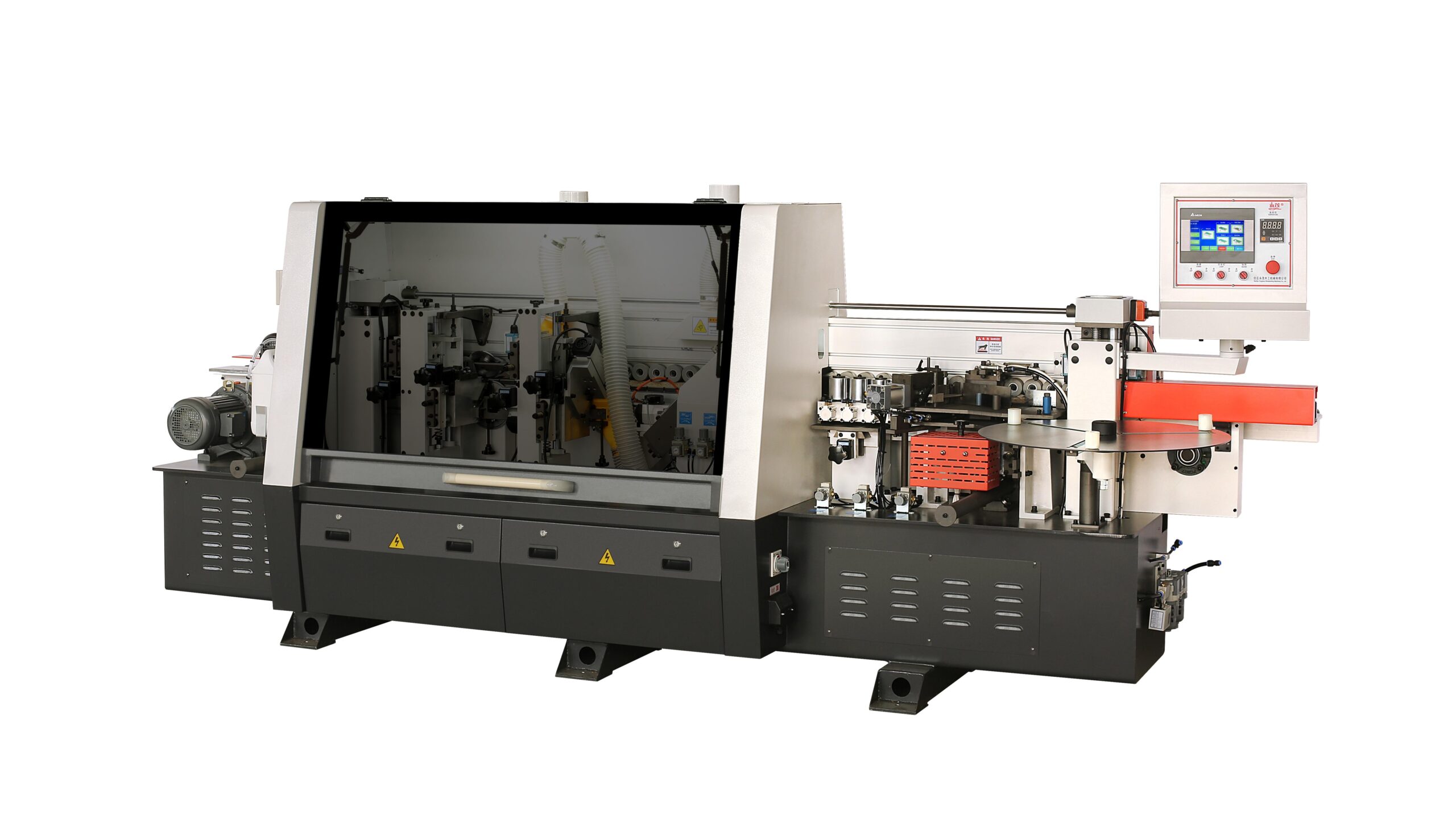
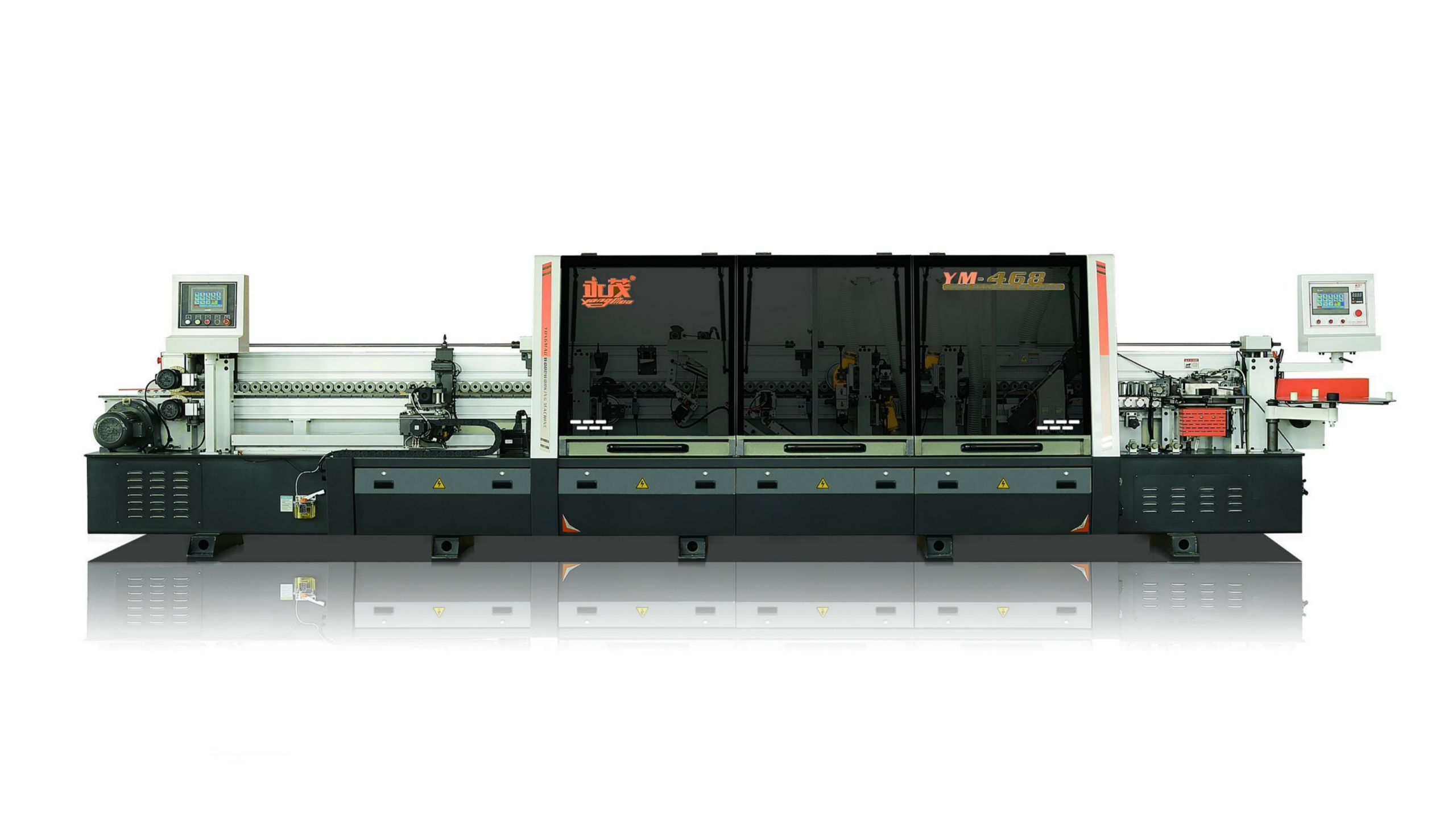
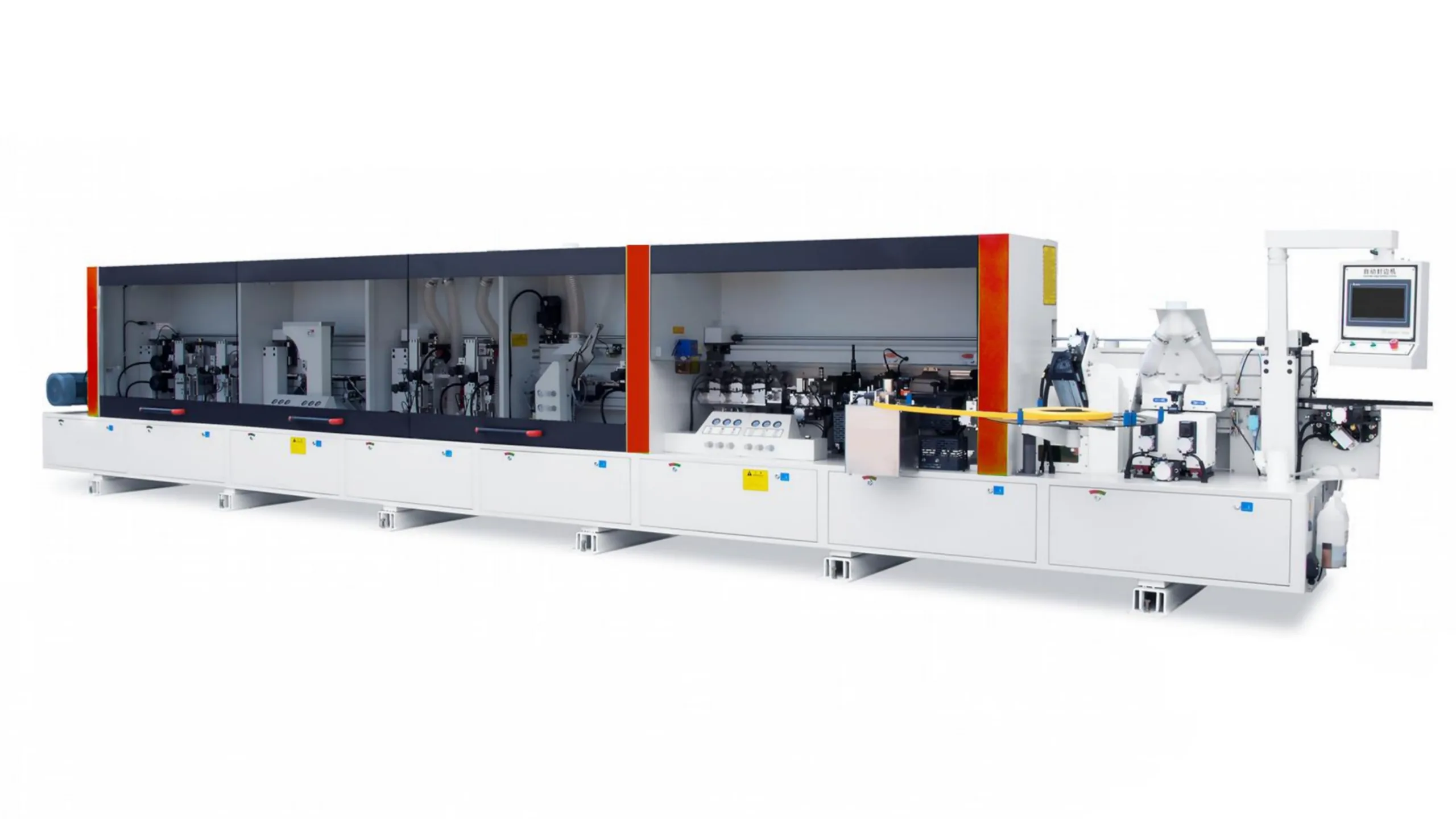
YM-365
Compact Automatic Edge Banding Machine
A compact straight-edge configuration for small furniture factories, cabinet start-ups and workshops that need automatic gluing, end cutting, fine trimming, scraping and buffing.

Compare six industrial configurations for cabinet, plywood and panel-furniture production—from compact straight-edge processing to pre-milling, corner trimming, PUR-oriented gluing, horizontal boring and 45-degree bevel work.
YongMao manufactures industrial automatic edge banding machines in Renqiu, Hebei, China. Choose a configuration by panel material and size, PVC, ABS or veneer tape, EVA or PUR adhesive requirements, visible edge profile, production mix, utilities and floor space. Every commercial detail—including edge banding machine price, lead time, warranty and shipping—must be confirmed in the written quotation.
The range serves different production workflows, not arbitrary labels. A “mini edge banding machine” search may describe a compact footprint, while a furniture factory may need added stations that remove secondary work.
A useful shortlist begins with the smallest recurring panel, the longest panel, edge banding tape thickness, the glue process and the finish expected at the leading edge, trailing edge, top, bottom and corners. A compact automatic edge banding machine can suit a small workshop only when its complete working envelope leaves room for infeed, outfeed, extraction, compressed air, electrical service and maintenance access. Portable edge banding machine and manual edge banding machine methods can be practical for site work, repairs, curved parts or occasional output; the verified YongMao range shown here is industrial and automatic.
For repeated cabinet components, automatic feeding and a defined process sequence can make gluing, cutting, edge banding trimmer operations, scraping and buffing easier to standardise. Larger configurations add functions such as pre-milling, corner trimming, dual glue-pot or PUR-oriented systems, horizontal boring and 45° bevel processing. Those additions should solve a documented part requirement; a longer machine is not automatically the best investment.

A compact straight-edge configuration for small furniture factories, cabinet start-ups and workshops that need automatic gluing, end cutting, fine trimming, scraping and buffing.

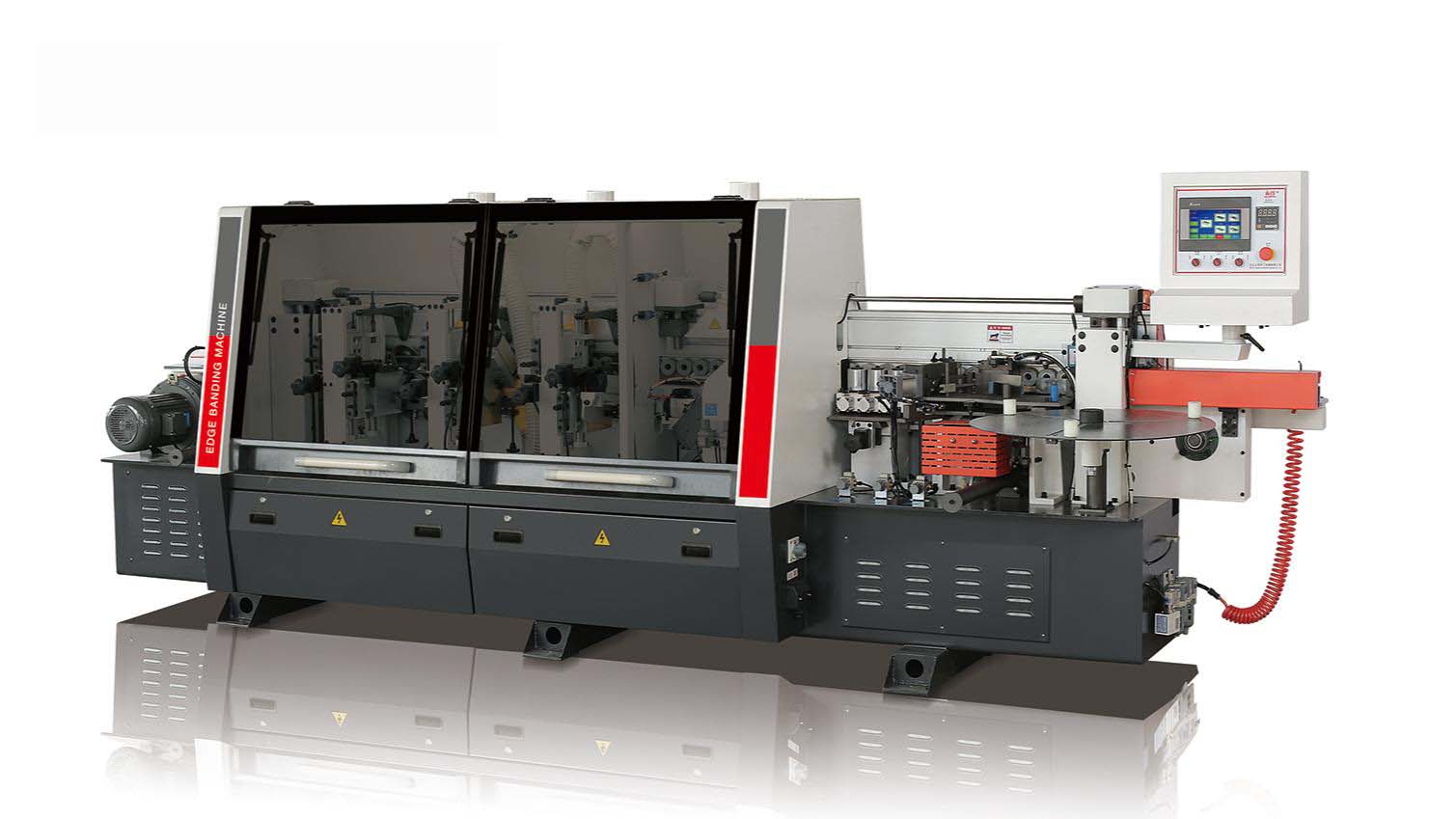
A six-station straight-edge line for wardrobe, cabinet and office-furniture production where dedicated rough and fine trimming are required.

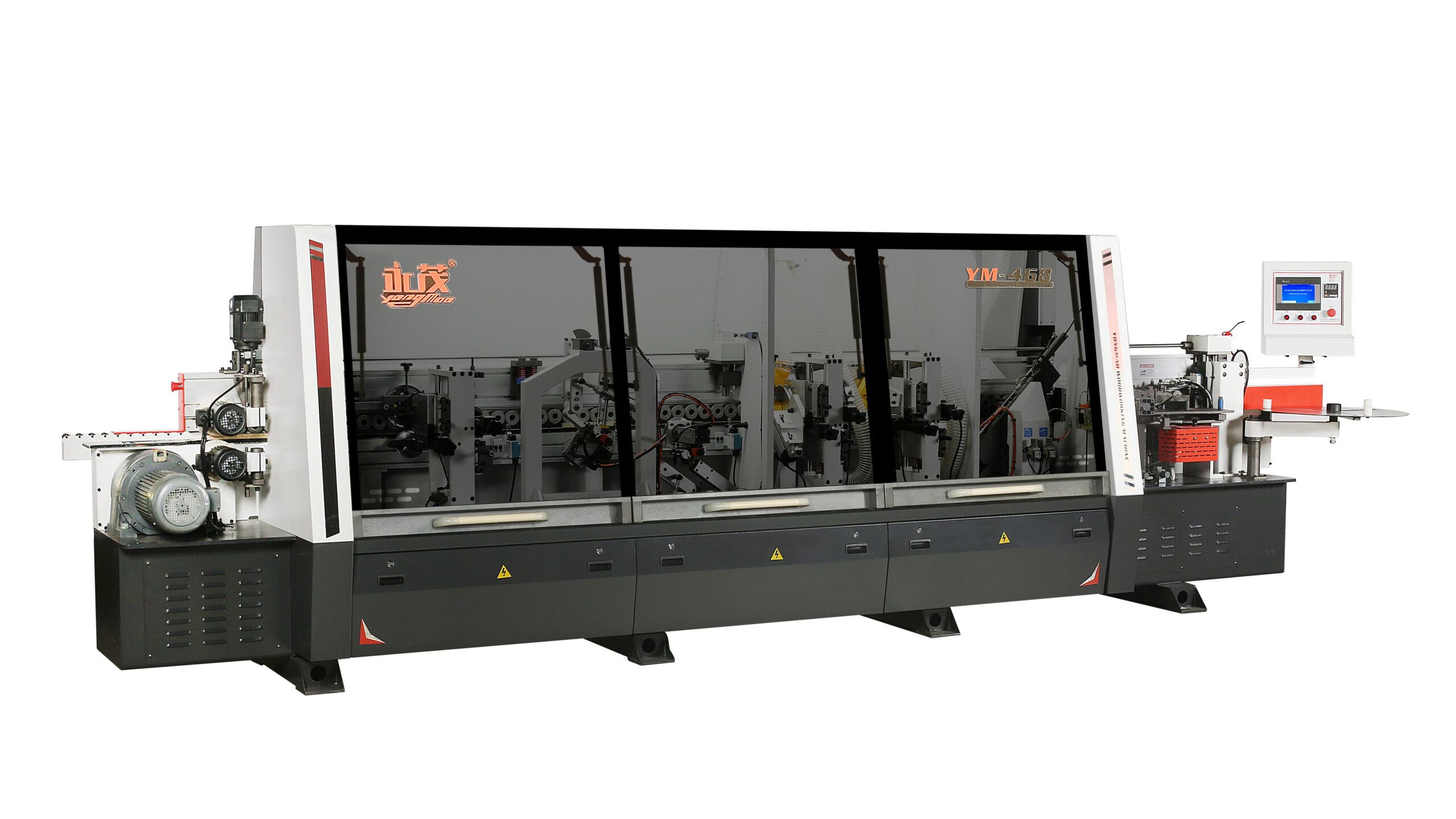
A family configuration for furniture plants that need corner trimming; the published YM-468J configuration adds pre-milling and a longer frame.

A glue-system family for cabinet production that specifies dual glue pots or a PUR-oriented process; YM-468JD adds pre-milling and corner trimming in the published configuration.

A combined configuration for panel plants evaluating straight-edge banding, corner trimming and independently controlled horizontal boring in one line.

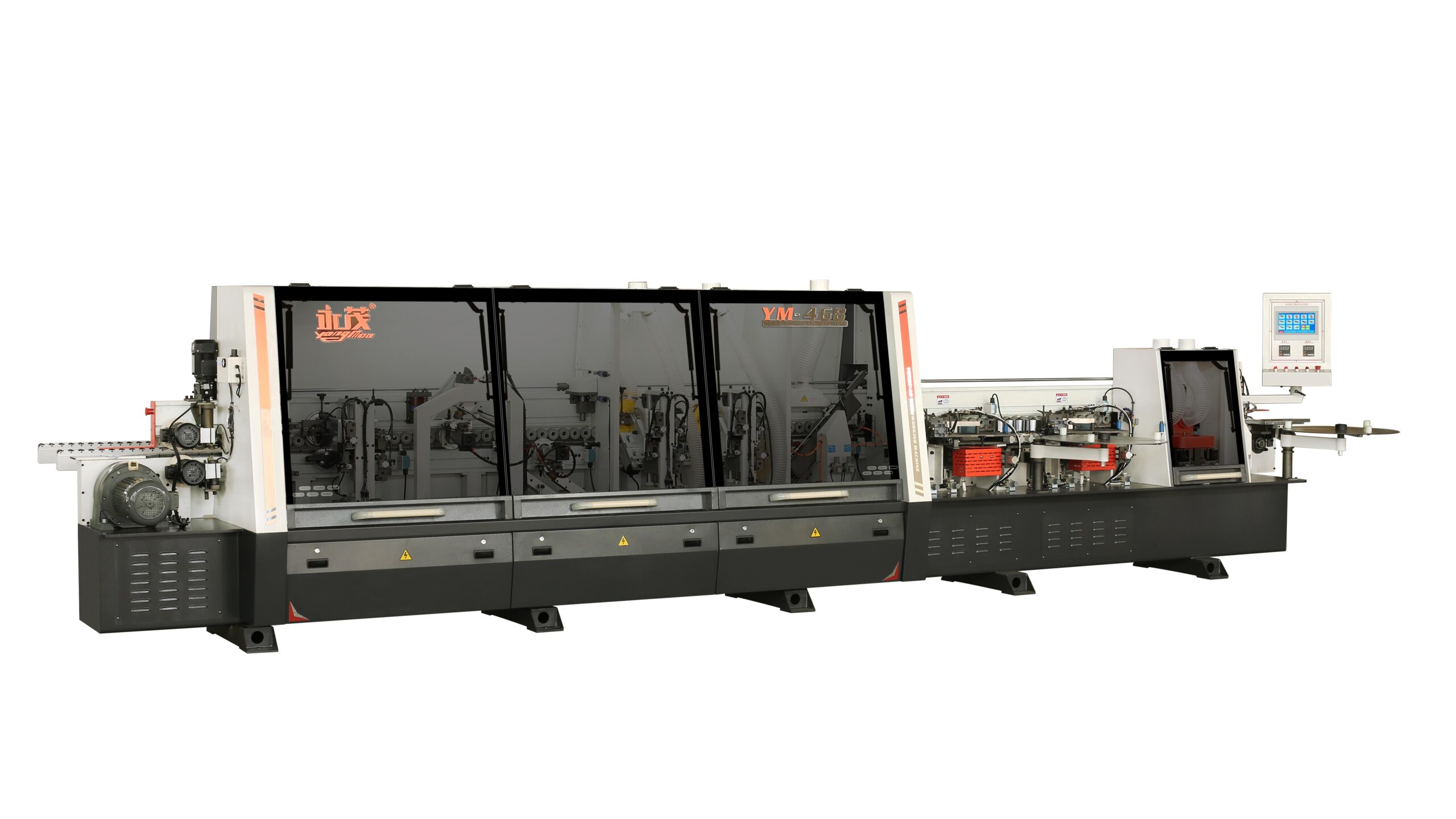
A long-line configuration for factories that alternate between 45-degree beveled doors and conventional straight-edged panels.
The tape name alone cannot select a machine. Combine material, dimensions, adhesive, panel edge condition and desired appearance in one application brief.
PVC edge banding tape is widely used on cabinet and panel-furniture parts. Confirm tape width, thickness, colour changes, protective film and the panel thickness range. Published YongMao pages list edge-band ranges for specific models, but the actual tape and adhesive should still be tested together.
PVC compatibility guide →ABS and PVC are both plastic edge materials, yet they may differ in composition, processing response and purchasing requirements. Do not treat the material name as proof of compatibility. Send the roll data sheet, finished-edge expectation and representative samples.
Compare ABS and PVC →Wood veneer edge banding and plywood edges can expose grain variation, fibres or core voids. Saw-cut quality, tape handling, glue choice, pre-milling, pressure and trimming all matter. A sample test is more useful than assuming every plywood grade behaves like MDF.
Wood veneer guide →PUR may be selected where the production brief requires its specific bond or resistance characteristics, while EVA remains common for many workflows. The glue pot, melting method, cleaning procedure, colour change and operator safety process must be defined for the exact machine.
PUR vs EVA guide →Evaluate a supplier through current evidence, a model-specific technical offer and an agreed pre-shipment test—not marketing claims alone.
The current factory page states production experience since 1994. Ask for the current company documentation and the team responsible for your offered configuration.
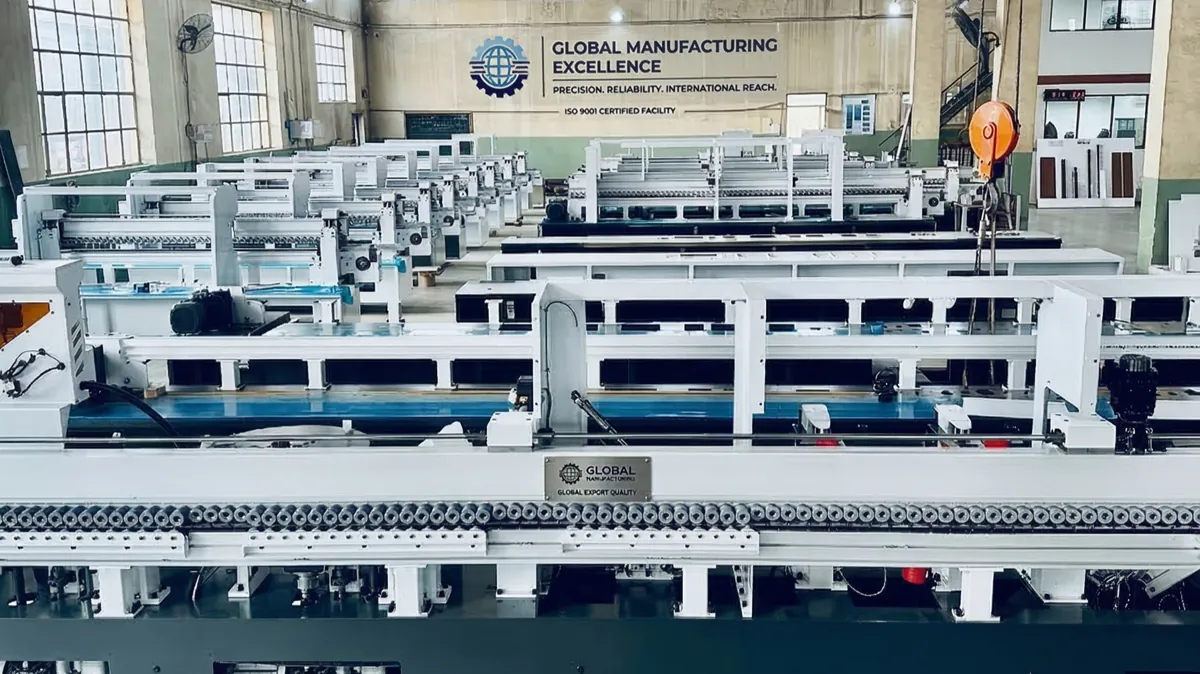
Factory images and video provide manufacturing context. Buyers should also request current assembly, run-off, serial-configuration and packing evidence for their own order.
The manufacturer references CE and ISO 9001. Request the declaration, report, manual and nameplate that apply to the exact machine; never rely on a certificate for unrelated equipment.
Published machines cover compact straight-edge production, rough trimming, pre-milling, corner treatment, PUR-oriented gluing, boring and bevel processing.
The manufacturer states exports to more than 50 countries. Each new order still needs country-, factory- and model-specific verification.
Send the destination country and port, panel and tape range, adhesive preference, edge profile, production mix, voltage, phase, frequency, extraction, compressed air and layout. This information separates a useful quotation from a generic price response.
Confirm the exact model and stations, optional equipment, electrical design, component list, safety documentation, manuals, spare parts, warranty, training, test material and acceptance method in writing.
Review packing, dimensions, gross weight, loading method, shipping marks, commercial invoice, packing list, transport documents and model-specific declarations. The importer should verify current local conformity and customs requirements.
Plan unloading, rigging, floor position, infeed and outfeed space, power, air, extraction, qualified electrical work, operator training and the panels used to approve the finished edge.
Technical content connects search terms to a real production decision, then routes the visitor to the one page that owns that intent.
A panel saw machine or CNC machine normally cuts the workpiece first. A cold press machine may be used earlier to prepare laminated panels. The edge banding machine follows cutting and applies tape, pressure and finishing operations to the exposed straight edge. YongMao’s verified catalogue on this site covers edge banding machines—not panel saw, CNC or cold press products.
Pre-milling prepares the panel edge immediately before gluing and can help when the incoming saw cut is inconsistent. It does not remove the need for correct tooling, extraction, feed setup, pressure, glue temperature, tape control and downstream trimming.
An edge banding trimmer may describe a hand tool in consumer searches. On an automatic line, end cutting, rough trimming, fine trimming, scraping and buffing are separate process stations. Confirm which stations are standard, optional or absent on the exact model.
Compare a common scope: stations, glue system, controls, electrical configuration, test, documents, packing, freight basis, duties, installation, training, parts and expected rework. A low headline edge banding machine price can omit the items needed to start production.
Start with material basics, diagnose a process problem, compare investment options, or prepare a country-specific export brief.

Understand what edge banding tape does, how PVC and ABS differ, and which material facts belong in a machine enquiry.
Read article →
Connect saw-cut quality, plywood voids, pre-milling, adhesive and trimming setup to a cleaner finished edge.
Read article →
Use a neutral total-cost framework to compare configuration, documentation, support, spare parts and landed cost without assuming equivalence or affiliation.
Read article →
Review voltage, documents, packing, destination port, unloading and commissioning before presenting a shipment as delivery-ready.
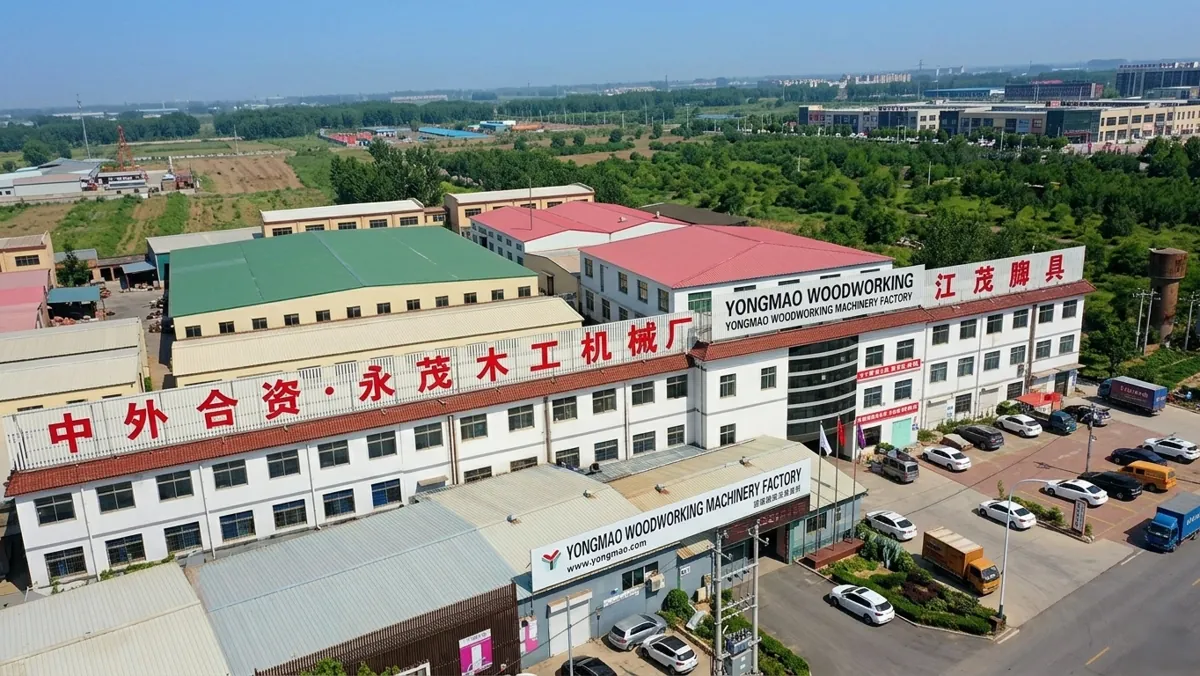
Read article →YongMao is a woodworking machinery manufacturer in Renqiu, Hebei Province, China. The company was established in 1994 and states a factory area of approximately 22,600 m². Buyers can request current company documents, factory video and model-specific production evidence with the quotation.
It feeds straight panels through a controlled sequence that can include gluing, end cutting, rough and fine trimming, scraping, buffing, pre-milling or corner treatment. The exact stations depend on the selected configuration.
Compatibility depends on tape thickness and width, panel material, adhesive, stations and tooling. Send the actual panel and tape data or samples for a model-specific review before ordering.
These are industrial machines, so the important specification is not a consumer plug. Send the installation site’s voltage, frequency, phase, available load, earthing and control requirements. The final electrical configuration and connection method must be confirmed in the written quotation before production.
Language requirements should be stated with the enquiry. Ask YongMao to confirm the operator-interface language, manuals, labels, warnings and electrical drawings included for the exact model. Any translation or customised language package should appear in the quotation.
Price depends on machine model, processing stations, glue system, voltage, options, test scope, packing and delivery terms. A useful quotation starts with the application rather than an unsupported online price.
Start with your country and destination port, panel and tape specifications, required process, production target, workshop space and electrical supply. YongMao can then prepare a model recommendation and quotation. Before payment, confirm the specification, Incoterm, inspection, packing, documents, warranty, installation and customs responsibilities in writing.
The packing plan should protect the machine from movement and moisture during international transport. Confirm the crate or other packing construction, fixing method, timber-treatment requirements, shipping marks, dimensions and gross weight. Request order-specific packing and loading photos before dispatch.
Send representative panels, tape, adhesive data and dimensioned drawings with the enquiry. A sample run-off, special profile or drawing-based configuration should be reviewed for technical feasibility, then defined in the quotation with the required result and inspection evidence.
The verified YongMao catalogue on this website covers industrial automatic machines. Portable and manual methods are discussed for comparison, but they are not presented as YongMao products.
Share your panel sizes, edge banding tape, adhesive, target output and destination to receive a practical model recommendation and export quotation built around your workshop.